

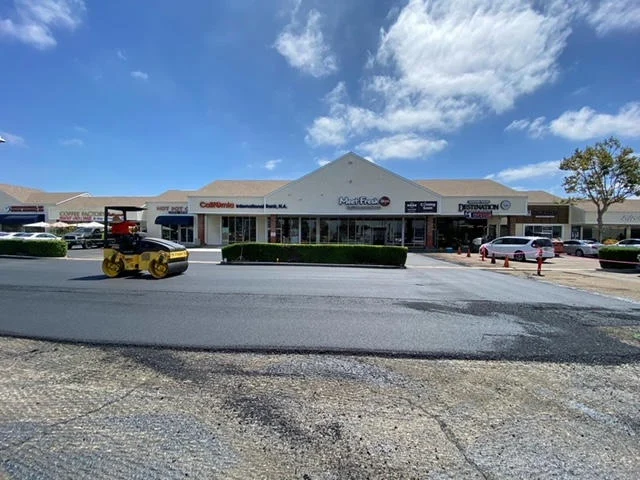
Temecula doesn’t get a lot of rain. But when it does come, usually between November and March, it tends to come all at once. And if you’re in the middle of a paving project or about to start one, that changes everything.
Rain and hot asphalt are a bad combination. It’s not just an inconvenience. Moisture during installation can compromise the structure of your pavement from day one. Here’s what actually happens and what you can do about it.
What Happens When Asphalt Gets Rained On During Installation
Asphalt needs to be laid hot, typically between 275 and 300 degrees Fahrenheit. When rain hits that surface, it cools the material too fast. The result is asphalt that doesn’t compact properly. And compaction is everything. It’s the difference between pavement that holds up for 20 years and pavement that starts cracking in two.
Water can also get trapped between the asphalt layer and the base underneath. That moisture has nowhere to go. Over time, it works its way through the material, creating weak spots, potholes, and surface failures. In a place like Temecula where summer temperatures regularly push past 100 degrees, that trapped moisture expands and contracts with every heat cycle. The damage compounds fast.
The Base Layer Problem
Rain doesn’t just affect the asphalt itself. It saturates the base underneath. In Temecula and the surrounding Inland Empire, the soil is a mix of decomposed granite, clay, and sandy loam depending on the specific area. Clay-heavy sections don’t drain well. When that base gets waterlogged, it becomes soft and unstable.
Laying asphalt on a saturated base is like building on a sponge. No matter how good the surface material is, it won’t perform. That’s why experienced paving contractors won’t pour on a wet base, period. The job needs to wait until conditions are right.
How Long After Rain Can You Pave?
There’s no single answer because it depends on how much rain fell, the soil conditions on your specific property, and how much sun and wind follow the storm. As a general rule, the surface and base need at least 24 to 48 hours of dry weather before paving can start. In areas with poor drainage or heavy clay content, it could take longer.
Temecula’s dry heat actually works in your favor during most of the year. After a winter storm passes, conditions can dry out relatively quickly compared to more humid regions. But don’t assume one sunny afternoon is enough. The surface might look dry while the base underneath is still holding moisture.
What About Sealcoating After Rain?
The same principle applies to sealcoating. Sealcoat needs a clean, dry surface to bond properly. If there’s moisture on the pavement or rain is expected within 24 hours of application, the sealant won’t cure correctly. You’ll end up with streaking, peeling, or a coating that wears off within months instead of lasting two to three years.
Temecula’s low humidity through the spring, summer, and fall makes it ideal sealcoating weather. The trick is avoiding those unpredictable late-season storms in March and early April and not rushing into it right after winter’s last rain.
Signs Your Pavement Was Laid in Wet Conditions
If you’re looking at an existing parking lot or driveway and noticing problems early, rain during installation could be the reason. Watch for surface raveling where the aggregate starts coming loose, premature cracking within the first year or two, areas that seem to sink or develop soft spots, and standing water where drainage should be moving it away.
These aren’t cosmetic issues. They’re structural. And they usually mean the affected sections will need repair or replacement sooner than they should.
Planning Around Temecula’s Weather
The good news is that Temecula’s climate is one of the most paving-friendly in the country. You get roughly 260 to 270 sunny days per year. The rainy season is short and predictable. That gives you a wide window to schedule work without worrying about weather delays.
The key is planning ahead. If you know your parking lot needs work, don’t wait until November to start the conversation. Lock in your project for the dry months and build in a buffer for any unexpected weather.
Get It Done Right the First Time
We’ve been paving across Southern California for over 25 years. We know Temecula’s soil, climate, and what it takes to get a job done right, rain or shine. If you’ve got a project coming up, reach out for a free estimate and we’ll help you plan around the weather so your pavement lasts.