

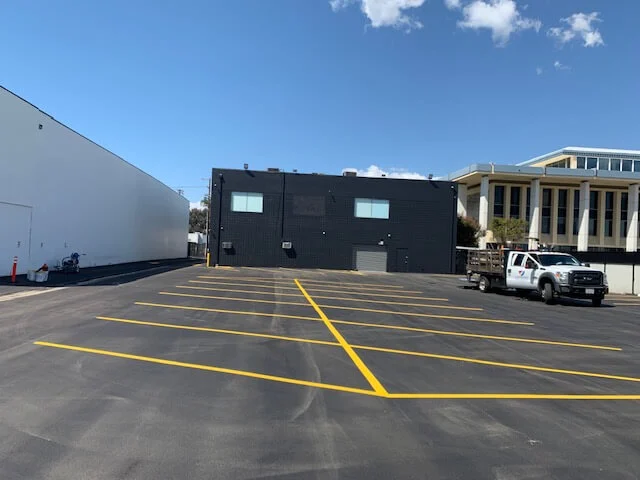
Most property managers assume a parking lot should last 20 years. In Southern California, that number is closer to 12 to 15 without consistent upkeep. And the ones that fail early almost never fail because of bad asphalt. They fail because of what was ignored underneath, around, and on top of it.
If you manage commercial property anywhere in the Inland Empire, from Riverside to San Bernardino to Rancho Cucamonga, your parking lot is dealing with conditions that most of the country never has to think about. Triple-digit summers. UV exposure that doesn’t let up for months. Sandy, expansive soils that shift under load. That combination speeds up every stage of pavement failure.
Summer is the turning point. Once temperatures start climbing in late May, existing damage gets worse fast. Cracks spread. Base layers weaken. Small problems become expensive ones. The window to get ahead of it is right now.
The Real Reasons Parking Lots Break Down Early in SoCal
When you see a parking lot crumbling, it’s tempting to blame the surface. But the surface is usually the last thing to go. Here’s what actually drives early failure in Southern California commercial lots.
Poor Drainage Design
Water is the number one killer of parking lots, even in a dry climate. When a lot doesn’t drain properly, standing water works its way through cracks and into the base layer. Once moisture gets under the surface, it softens the subgrade and creates voids. You end up with depressions, potholes, and sections that sink under traffic.
In the IE, this is especially common in lots built on sandy or clay-heavy soils. Those soils expand when they absorb water and contract when they dry out. That movement pulls the pavement apart from underneath.
Skipped or Delayed Sealcoating
A fresh sealcoat does more than make a parking lot look new. It blocks UV rays from oxidizing the binder that holds everything together. In the Inland Empire, where UV exposure is relentless from April through October, unprotected asphalt dries out and turns brittle in about three to four years.
Once the surface gets brittle, cracking starts. And once cracking starts, everything else accelerates. A sealcoat every two to three years is the cheapest form of protection you can invest in.
Deferred Crack Sealing
Small cracks don’t look like a big deal, but they’re the entry point for everything that causes real damage. Water, dirt, and debris work their way into those cracks and erode the base. In a climate where pavement surface temperatures swing 60 degrees between night and mid-afternoon, those cracks expand quickly.
Sealing cracks when they first appear costs a fraction of what you’ll spend on full repairs once the base is compromised.
Heavy Vehicle Damage
Delivery trucks, garbage haulers, and fire lane traffic put concentrated loads on pavement that wasn’t designed for that kind of weight. Most commercial parking lots are built with a 2- to 3-inch asphalt layer over aggregate base. That’s fine for cars. It’s not enough for loaded trucks making the same turns and stops every week.
If your property gets regular heavy vehicle traffic, those areas need thicker sections or concrete aprons. Otherwise, you’ll see rutting and base failure in the same spots every time.
What to Check Before Summer Hits
The smart move is a walkthrough in spring. You’re looking for things that are manageable now but will get worse once temperatures climb above 100 degrees.
| What to Look For | Why It Matters | What to Do Now |
| Linear cracks longer than 2 feet | These will widen and branch in summer heat | Seal with hot-pour crack filler before temps hit 90+ |
| Alligator cracking in any section | Signals base failure, not just surface wear | Schedule milling and overlay or full-depth patch |
| Standing water after irrigation or rain | Water is undermining the base layer | Fix drainage grade and seal the affected area |
| Faded, gray surface with no sealcoat | UV has oxidized the binder. Surface is brittle | Apply sealcoat as soon as possible |
| Worn or missing striping | Affects traffic flow, ADA compliance, and liability | Re-stripe after any surface treatment |
| Sunken areas near dumpster pads or loading zones | Heavy loads have compressed the base | Full-depth repair with thicker section for that zone |
Why Timing Matters More in Southern California
Asphalt work has an ideal temperature window. Most paving and sealcoating should be done when air temperatures are between 50 and 85 degrees and rising. In the Inland Empire, that window is roughly March through mid-June, and then again in late September through November.
Once summer is in full swing, sealcoating can flash-cure on the surface before it bonds properly. Paving crews deal with material that cools too fast on the edges and stays soft too long in the center. And the reality is that most contractors are booked solid through summer because everyone waits until the damage is obvious.
Getting work scheduled in spring means better results and more flexibility on timing. It also means your lot is protected before the hottest months, when the most damage occurs.
The Cost of Waiting vs. Acting Now
Here’s how the math works out. Crack sealing and sealcoating on a 50,000-square-foot parking lot might run a few thousand dollars. That same lot, left untreated for two or three more summers, could need a mill-and-overlay that costs ten times as much.
Property managers who budget for routine maintenance spend less over the life of the lot than those who wait for visible failure. Every year you delay sealcoating, you’re shaving time off your pavement’s life and adding cost to the eventual repair.
It’s basically insurance. You’re spending a small amount now to avoid a much larger bill later.
How to Prioritize If You Manage Multiple Properties
If you oversee a portfolio of commercial properties across the IE, you can’t do everything at once. Here’s a practical way to prioritize.
Start with the lots that have the most visible cracking and no recent sealcoat. Those are the ones where damage will accelerate fastest once summer starts. Next, look at properties with heavy vehicle traffic, especially loading zones and drive aisles near dumpster areas. Finally, address any lots where drainage issues have been reported or where you’ve seen standing water.
A contractor who knows the region can walk your properties and help you build a phased plan that fits your budget. That’s a smarter approach than reacting to emergencies one at a time.
Get Ahead of Summer. Don’t Chase It.
The parking lots that last in Southern California are the ones that get attention before problems become emergencies. A spring inspection and a maintenance plan can add years to your pavement and save you from costly surprises in August.Victory Paving works with property managers across the Inland Empire, from Murrieta to Fontana to Corona. If you want a straight assessment of what your lot needs before summer, reach out for a free estimate. We’ll tell you what’s urgent, what can wait, and what it’ll cost.