

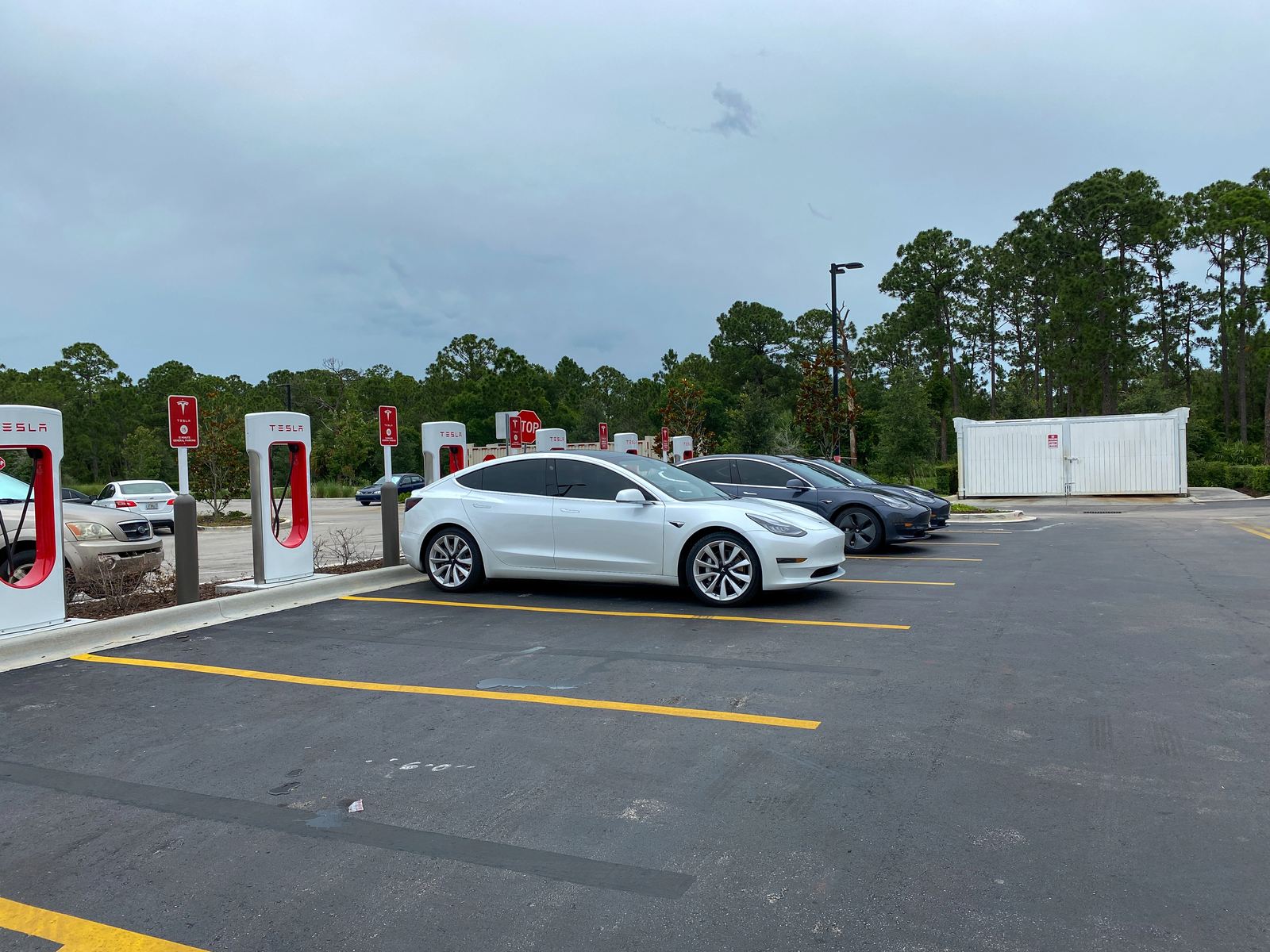
California EV parking lot requirements mandate that commercial property owners install EV Capable, EV Ready, and fully equipped Electric Vehicle Charging Station (EVCS) infrastructure across a defined percentage of parking spaces under the 2025 California Green Building Standards Code (CALGreen), which took effect January 1, 2026. New non-residential projects must now meet stricter EVCS counts, comply with California Building Code (CBC) Chapter 11B-812 for accessibility, and may trigger prevailing wage obligations on publicly funded or incentivized installations.
If you manage a retail center, office park, hotel, multifamily complex, or distribution facility in Southern California, the rules changed in a meaningful way. According to the California Energy Commission, the 2025 CALGreen update increases the share of installed Level 2 chargers at office and retail sites to roughly 75% of the calculated EV Capable spaces, up sharply from previous code cycles.
This guide walks you through the new code, the ADA standards, the prevailing wage triggers, and the practical lot-design decisions that protect your project from costly rework.
What Are California’s EV Parking Lot Requirements?
California EV parking lot requirements are a combination of three regulatory layers: CALGreen (Title 24, Part 11) for the number and type of EV charging spaces, the California Building Code Chapter 11B-812 for ADA accessibility of those spaces, and California Labor Code Section 1720 for prevailing wage on qualifying public works.
These requirements apply to new construction, additions, and many alterations of commercial parking facilities. Local jurisdictions such as San Francisco impose stricter local amendments, with the city requiring existing publicly accessible commercial garages with 100 or more parking spaces to install EV chargers at 10% of spaces.
California aims to have 100% zero-emission new cars and trucks sold by 2035 and 5 million zero-emission vehicles on the road by 2030, according to the California Air Resources Board. The building code is the state’s primary mechanism for backing those goals with physical infrastructure.
2026 CALGreen Code: New Non-Residential EV Charging Mandates
The 2025 CALGreen update, effective for permits submitted on or after January 1, 2026, expands EV infrastructure requirements for commercial parking lots in three major ways: more installed chargers, reduced power allocation for future-only spaces, and new connector standards.
According to the California Building Standards Commission, the maximum power allocated to EV Capable spaces is now reduced from 50% to 25% of the total power budget. That shift effectively forces more electrical capacity onto installed EVCS rather than reserving it for theoretical future use.
EV Capable vs. EV Ready vs. EVCS: Know the Difference
Each term refers to a distinct level of build-out. Knowing which applies to which stall determines your electrical scope, your trenching plan, and your final striping layout.
- EV Capable Space: A parking space with electrical panel capacity and raceway (conduit) in place to support a future 40-amp Level 2 circuit. No wire is pulled and no receptacle is installed.
- EV Ready Space: A parking space with a complete branch circuit, conductors, and a terminating receptacle or charger outlet. Drivers can plug in a portable charger immediately.
- EVCS (EV Charging Station): A space equipped with an installed Level 2 or DC fast charger (EVSE). These are the only spaces that count as active public charging.
Required EVCS Percentages by Parking Lot Size and Use
For non-residential parking lots under the 2025 CALGreen Code, the count of EV Capable spaces and required EVCS scales with total parking spaces and whether the use is office and retail versus other non-residential. The table below summarizes the general approach. Verify final counts with your local building department.
| Total Parking Spaces | EV Capable Spaces | EVCS (Office and Retail) | EVCS (Other Non-Residential) |
| 0 to 9 | 0 | 0 | 0 |
| 10 to 25 | 4 | 3 (approx. 75%) | 2 (approx. 50%) |
| 26 to 50 | 8 | 6 | 4 |
| 51 to 75 | 11 | 8 | 6 |
| 76 to 100 | 16 | 12 | 8 |
| 101 to 150 | 23 | 17 | 12 |
| 201+ spaces | Calculated | 75% of EV Capable | 75% of EV Capable |
Note: Numbers shown are illustrative based on the 2025 CALGreen approach. The exact code tables in Section 5.106.5.3 should be referenced for final scoping, and many cities including Los Angeles, Riverside, and San Diego layer additional local amendments. Engage a contractor familiar with commercial paving in Southern California before your stripe layout is locked in.
ADA Compliance for EV Stalls Under CBC 11B-812
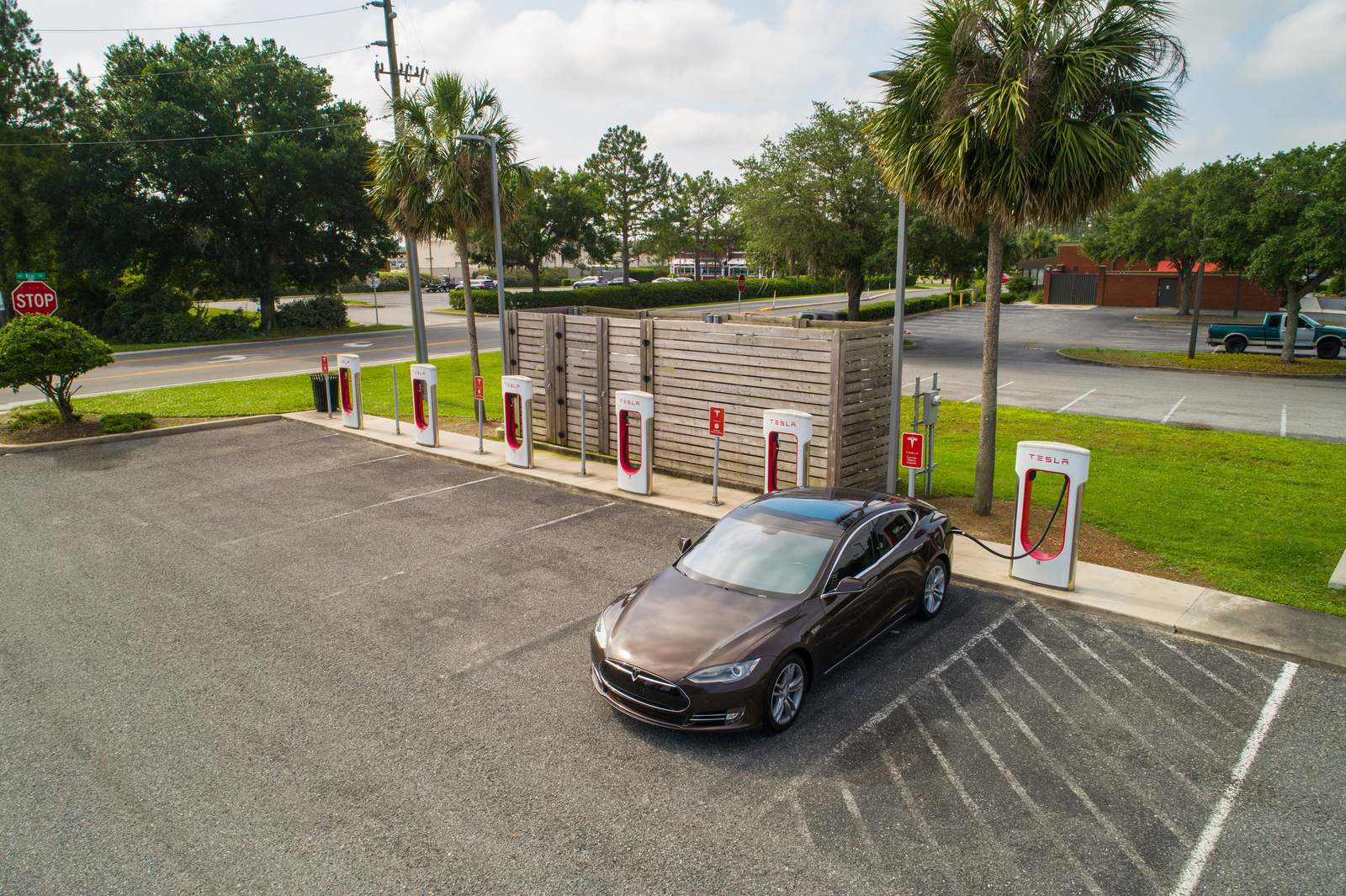
ADA compliance for EV stalls in California is governed by California Building Code Section 11B-812, which sets accessible EVCS scoping, dimensions, route requirements, and signage. These rules are separate from standard ADA parking and apply any time EVCS are installed for public use.
According to the California Division of the State Architect, accessibility requirements for EVCS became enforceable on January 1, 2017, and the 2022 and 2025 code cycles tightened them further. Failure to comply opens property owners to drive-by ADA lawsuits, which remain one of the most common litigation categories in California commercial real estate.
Four Types of Accessible EVCS
Per CBC Section 11B-228.3.2.1, accessible EVCS fall into four categories. The number of each type required is scaled by the total number of EVCS at the facility.
- Van Accessible EVCS: 144 inches wide minimum with a 96-inch access aisle. Required as the first accessible stall.
- Standard Accessible EVCS: 108 inches wide minimum with a 60-inch access aisle.
- Ambulatory EVCS: Smaller stall designed for users who do not require wheelchair transfer space.
- Drive-Up EVCS: Pull-through configuration similar to a fueling island, 240 inches long minimum.
Dimensions, Layout, and Accessible Route
All accessible EVCS vehicle spaces must be 216 inches (18 feet) long minimum. Where the long dimension runs parallel to traffic flow, that minimum increases to 240 inches (20 feet). An accessible route, defined as a continuous unobstructed path negotiable by a wheelchair user, must connect both the vehicle space to the EV charger and the vehicle space to the facility entrance.
The EV charger itself must be located adjacent to and within the projected width of the served vehicle space, per Section 11B-812.10.4. Cables cannot obstruct the accessible route. These layout rules are why ADA parking lot upgrades and EV installations are often scoped together, since incremental striping changes can be cheaper than two separate mobilizations.
Signage and Surface Markings
Required identification signs are spelled out in Section 11B-812.8 and surface markings in Section 11B-812.9. If four or fewer EVCS stalls are provided, no crosshatched areas or International Symbol of Accessibility signage is required for the accessible spaces. Above that threshold, full signage applies. Pavement legends must be consistent and high-contrast, which is one reason parking lot striping for EV projects often requires a specialty crew familiar with both ADA and EVCS templates.
Prevailing Wage Implications for Property Managers
Prevailing wage applies to most California public works projects over $1,000, including construction, alteration, installation, repair, or maintenance work funded in whole or part by public money. For EV charging projects, prevailing wage is triggered in several common scenarios that property managers often miss.
When Prevailing Wage Applies to EV Installations
- Public funding or incentives: Any project receiving CALeVIP rebates is subject to California prevailing wage law under Labor Code Sections 1720 and 1770.
- AB 2143 renewable tariffs: Customer-sited renewable generation systems (such as solar carports paired with EVCS) over 15 kW that enroll in Net Energy Metering or Net Billing tariffs after January 1, 2024 must pay prevailing wage.
- Public agency contracts: Any work for a city, county, school district, transit agency, or other public entity above the $1,000 threshold.
- Federal IRA bonus credits: Projects pursuing the 30% Alternative Fuel Vehicle Refueling Property Credit must meet prevailing wage and apprenticeship (PWA) requirements.
EVITP Certification and Crew Composition
The Electric Vehicle Infrastructure Training Program (EVITP) certification is now standard. CALeVIP rules require at least one EVITP-certified electrician on each crew at any given time. For chargers supplying 25 kilowatts or more, at least 25% of the electricians on the crew must hold EVITP certification.
Violations carry real teeth. According to the California Department of Industrial Relations, contractors found underpaying workers can be fined up to $200 per day for each underpaid employee, and willful or repeat violators can be debarred from public works bidding for up to three years. Property managers should require certified payroll records (eCPR submissions) from their EV contractors before final payment is released.
Cost Considerations and Funding Opportunities
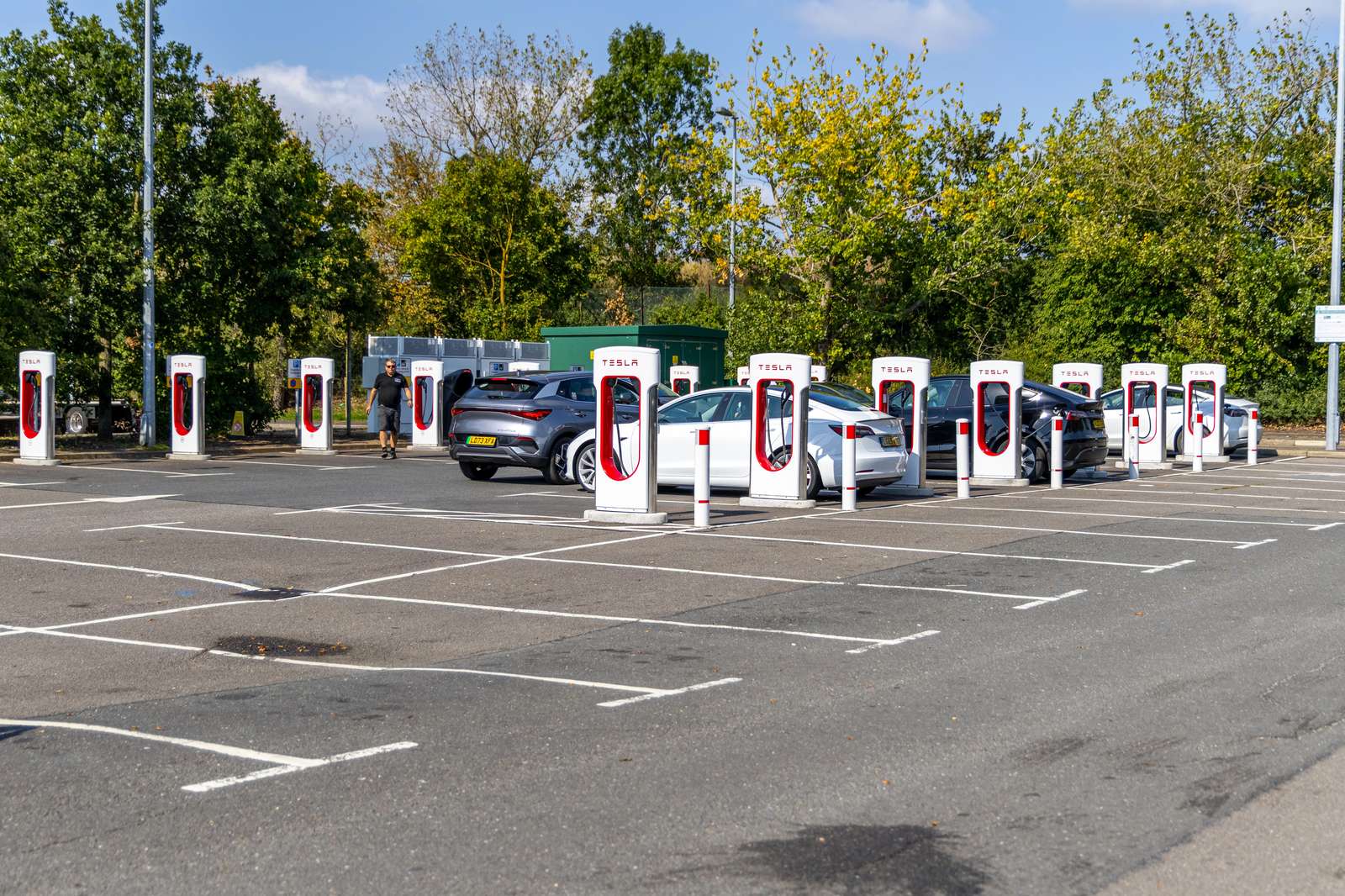
Commercial EV charging station installation costs range from $3,000 to $12,000 per Level 2 charger and $80,000 to $250,000 per DC fast charger, with trenching, transformer upgrades, and switchgear often driving the upper end. Site prep and concrete pads typically represent the most variable line item.
Three funding programs help offset these costs for Southern California property owners:
- CALeVIP: California Electric Vehicle Infrastructure Project rebates start at $3,500 per Level 2 connector, with an additional $2,000 per connector for multi-unit dwellings and $500 per connector for Disadvantaged or Low Income Communities.
- Federal Alternative Fuel Vehicle Refueling Property Credit: Up to 30% of cost (capped at $100,000 per item) for projects in eligible census tracts placed in service before June 30, 2026.
- Utility Make-Ready Programs: Southern California Edison, SDG&E, and PG&E offer make-ready infrastructure programs that can cover the utility-side trenching and transformer costs.
Layering these incentives can cut net installation cost by 40% to 60% on a typical commercial deployment, but every program adds compliance overhead, including data sharing, signage labels, and minimum service terms (2 years for Level 2, 5 years for DCFC).
Why Property Managers Should Plan EV Lots Before First Stripe
EV infrastructure planning belongs in the schematic design phase, not after the lot is sealed and striped. Trenching through new asphalt to add conduit costs three to four times more than installing the conduit during initial paving, according to industry estimates from EV infrastructure consultants.
Property managers overseeing multi-tenant retail, healthcare campuses, and HOA communities can save substantial money by coordinating EVCS rough-in with planned parking lot maintenance cycles. A scheduled mill-and-overlay or full-depth reconstruction is the ideal moment to drop in EV Capable conduit for every stall the code requires.
Distribution centers and manufacturing facilities face a different calculation. With heavier electrical loads and fleet electrification mandates from the California Air Resources Board’s Advanced Clean Fleets rule, distribution center paving projects increasingly include dedicated DC fast charger pads and reinforced concrete sub-base for heavy-duty truck charging.
Common Mistakes to Avoid
Five errors show up repeatedly in non-compliant EV parking lots across Southern California:
- Skipping accessible route analysis. Property owners often install EVCS in spaces without a compliant accessible route to the building entrance, triggering rework.
- Undersized service panel. EV Ready requirements demand circuit capacity that many existing panels cannot support without expensive upgrades or load management.
- Missing EVITP certification. Hiring an electrician without EVITP credentials disqualifies the project from CALeVIP rebates and most utility programs.
- Wrong signage type. Generic EV signs are not enough for accessible EVCS, which need specific identification per 11B-812.8.
- Ignoring prevailing wage on subsidized projects. Taking a CALeVIP rebate without paying prevailing wage exposes the owner to back-pay claims, penalties, and rebate clawback.
Frequently Asked Questions
Do existing commercial parking lots have to retrofit EV chargers?
Existing commercial parking lots are not required by CALGreen to retrofit EV chargers unless they undergo a major alteration that triggers the code, or they fall under a local ordinance such as San Francisco Ordinance 244-19 (which requires existing publicly accessible commercial garages with 100+ spaces to install EVCS at 10% of stalls). However, ADA path-of-travel rules can be triggered any time you install new EVCS at an existing site, even voluntarily.
How many ADA accessible EV stalls do I need?
The number of ADA accessible EV stalls is set by Table 11B-228.3.2.1, which scales by total EVCS at the facility. A lot with 1 to 4 EVCS requires 1 accessible (van) EVCS; lots with 5 to 25 EVCS require 2 accessible stalls (1 van, 1 standard); larger facilities require additional standard and ambulatory accessible stalls. All accessible EVCS must be on an accessible route to the building entrance.
Does prevailing wage apply to a privately funded EV charger installation?
Prevailing wage does not apply to purely private EV installations under $1,000 with no public funding. It does apply when the project receives CALeVIP or utility rebates, when the work is on public property or for a public agency, when the project enrolls in NEM tariffs with paired solar over 15 kW under AB 2143, or when the owner is pursuing the federal 30% Alternative Fuel Vehicle Refueling Property Credit at the bonus rate.
What is the difference between EV Capable, EV Ready, and EVCS?
EV Capable means conduit and panel capacity are in place for a future Level 2 circuit but no wire is pulled. EV Ready means the full branch circuit and receptacle are installed and ready to plug into. EVCS means a Level 2 or DC fast charger is installed and operational. The 2025 CALGreen Code shifted more parking spaces from Capable to Ready and Installed categories, especially at office and retail sites.
How long does it take to install commercial EV charging?
A typical commercial Level 2 EV charging installation takes 6 to 12 weeks from design to energization, including permitting (2 to 4 weeks), utility coordination (4 to 8 weeks for any service upgrade), and construction (1 to 3 weeks). DC fast charger projects routinely take 6 to 18 months due to transformer and switchgear lead times. Coordinating EV trenching with scheduled asphalt repair or sealcoating can compress the overall timeline.
Can I install EV chargers without resurfacing my parking lot?
Yes, EV chargers can be installed by saw-cutting trenches through existing asphalt and patching, but the surface integrity around the cuts often degrades within 12 to 24 months. Most property managers in Southern California time their commercial sealcoating or overlay schedule to coincide with EV trenching so the patches receive a uniform new surface and warranty.
Build a Compliant EV-Ready Parking Lot with Victory Paving
Victory Paving works with property managers, HOAs, retail centers, and industrial operators across Southern California to plan EV-ready parking lots that meet CALGreen, CBC 11B-812, and prevailing wage requirements from day one. We coordinate conduit rough-in, ADA stall layout, accessible route grading, and final striping so that your EV scope and your asphalt scope speak the same language.
Whether you manage a single retail pad or a portfolio of property management sites, we can scope a code-compliant EV parking layout with your electrical contractor and deliver the asphalt, concrete pads, and striping that put the project over the finish line. Call Victory Paving at 760-367-8047 for a free site assessment.