

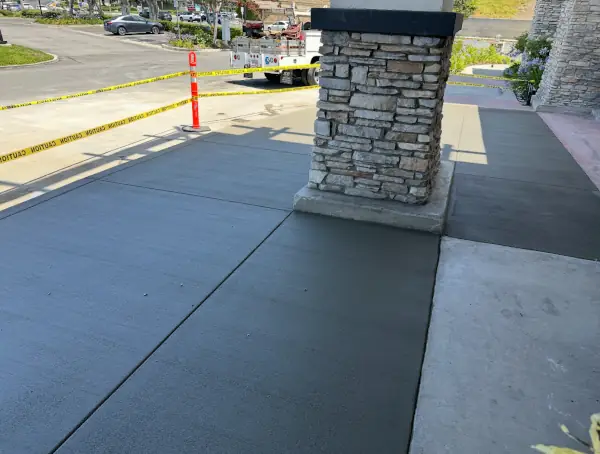
In Temecula, sidewalk repair responsibility comes down to one question: is the concrete inside the public right-of-way, or is it on private property? California Streets and Highways Code Section 5610 places the duty to maintain a sidewalk fronting a public street on the owner of the abutting lot. That is the statewide default, and it surprises most property owners the first time they hear it.
Temecula complicates that default in a useful way. The City has not adopted the kind of local sidewalk repair ordinance that Sacramento and Los Angeles use to bill owners, and Temecula’s Public Works Department lists sidewalk maintenance as part of its own mission. Meanwhile, the walkways that run through commercial centers, medical campuses, and business parks usually are not in the right-of-way at all, which makes them entirely the owner’s cost.
We have been pouring and replacing concrete across Temecula for more than 30 years, and this is the single most common question property managers ask us before approving a repair. Here is how the pieces actually fit together.
Key Takeaways
- Section 5610 of the California Streets and Highways Code assigns the maintenance duty for a sidewalk fronting a public street to the abutting property owner. This is state law and applies in Temecula.
- A duty to repair and liability for a pedestrian injury are two separate legal questions in California. Owners can hold one without automatically holding the other.
- Temecula Municipal Code Title 12, Streets, Sidewalks and Public Places, contains only three chapters: park use, taxicabs, and parades. There is no local sidewalk repair ordinance in it.
- Walkways, courtyards, and pedestrian paths on a private commercial parcel are the owner’s responsibility in full. No city cost share exists for them.
- Any concrete work touching the public right-of-way requires an encroachment permit under Temecula Municipal Code Chapter 18.12, issued by the city engineer.
- Under federal right-of-way accessibility guidelines, vertical changes in level over one half inch are the practical threshold where a sidewalk stops being a cosmetic problem and becomes a compliance and liability problem.
Disclaimer: Victory Paving builds and repairs concrete and asphalt. We are not attorneys, and this article is general information rather than legal advice. Sidewalk responsibility in Temecula turns on the specific easement, tract map, and CC&R language recorded against your individual parcel, and the City retains discretion in how it applies state law to a given case, so confirm your own situation with the City of Temecula Public Works Department and qualified California counsel before acting on anything below.
The Short Answer: Three Different Outcomes Depending on Where the Concrete Sits
There is no single answer for the whole city, because Temecula sidewalks fall into three legally distinct categories. Identify which one your concrete belongs to and the responsibility question usually resolves itself.
| Where the concrete sits | Who generally holds the duty | Who generally pays | Permit needed |
|---|---|---|---|
| Sidewalk fronting a public street, inside City right-of-way | Abutting owner under Section 5610, though the City maintains sidewalks in practice | Frequently absorbed by the City; confirm case by case | Encroachment permit if the owner does the work |
| Curb, gutter, and driveway approach in the right-of-way | Same split, though driveway approaches usually track the property they serve | Commonly the owner for approaches | Encroachment permit |
| Walkway or path on a private commercial parcel | Property owner | Property owner, in full | Grading or building permit may apply |
| Sidewalk inside an HOA common area | The association, under its recorded CC&Rs | Association reserves | Depends on whether the tract dedicated the right-of-way |
| Sidewalk lifted by a City-planted street tree | Contested, and generally not the owner where the City planted and maintains the tree | Frequently the City | City-performed work |
Notice how much of that table says “generally” and “commonly.” That hedging is deliberate. Sidewalk responsibility in California is genuinely unsettled at the edges, and any contractor who gives you a flat answer without looking at your parcel is guessing.
What California Law Says: Streets and Highways Code Section 5610
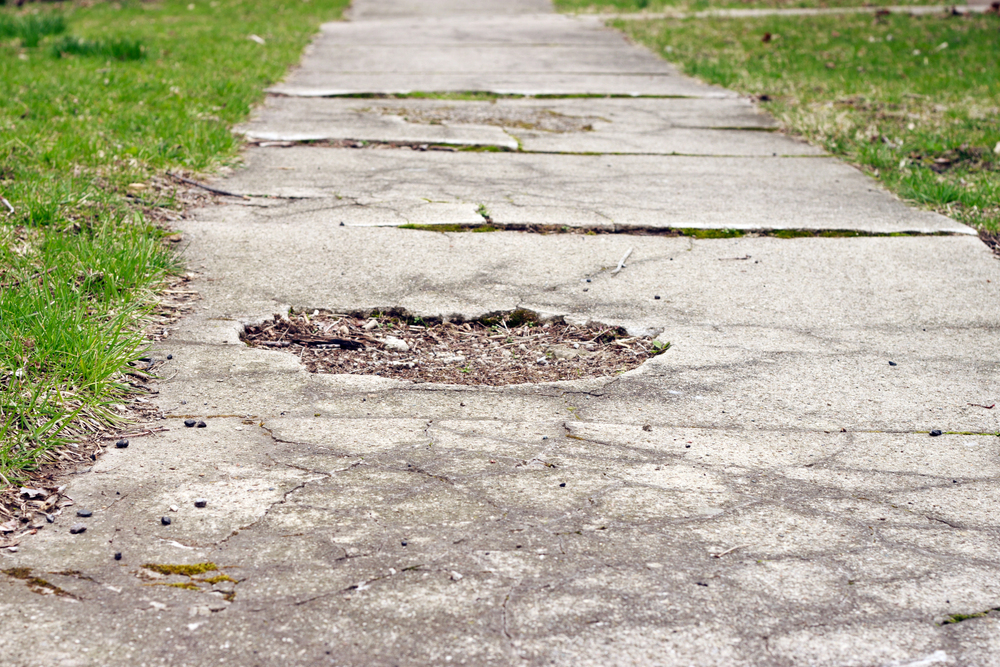
Section 5610 requires owners of lots fronting a public street to maintain the adjacent sidewalk so that it will not endanger persons or property and will not interfere with public convenience. The statute carves out an exception for conditions created or maintained by someone other than the owner acting under a permit or right granted by the city. Those parties carry a like duty. Sections 5610 through 5618 are the provisions that let California cities require abutting owners to maintain sidewalks, and they sit within the Improvement Act of 1911.
So the duty exists. What many owners miss is that the duty and the liability are separate things.
Where there is no owner negligence and no local ordinance imposing a duty to repair, California courts have held that Section 5610 does not, by itself, impose tort liability on the owner for pedestrian injuries or require the owner to indemnify the city. The recognized exceptions are where the owner created the defect or exercised dominion and control over the sidewalk (see Williams v. Foster (1989) 216 Cal.App.3d 510). Separately, a public entity can be liable for foreseeable injuries from a dangerous sidewalk condition negligently created by an adjacent landowner where the entity had actual or constructive notice in time to act, under Government Code Sections 830, 835, and 835.2.
An abutting owner has always had a duty to refrain from affirmative conduct that renders a sidewalk dangerous. If your landscaping crew planted the tree that lifted the slab, or your delivery trucks crushed the panel, that is affirmative conduct and the analysis changes entirely.
Where Temecula Differs From Most California Cities
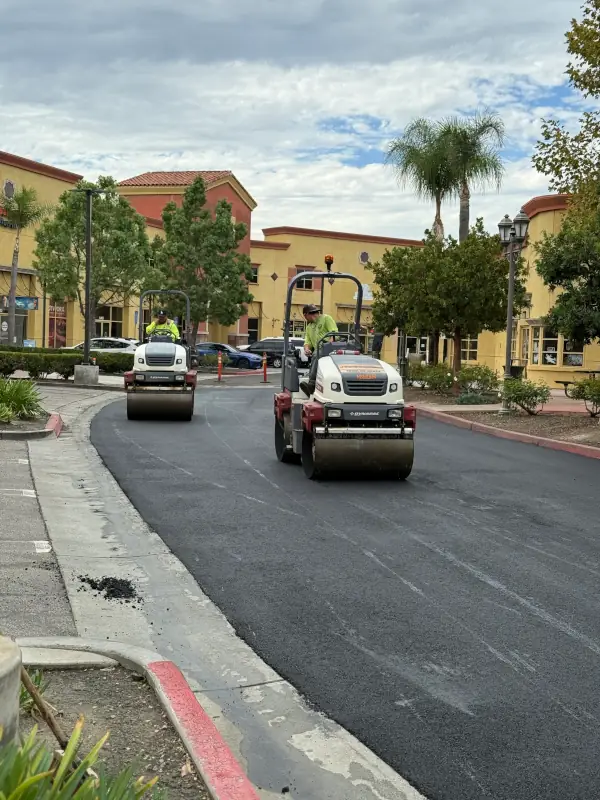
Temecula appears more owner-friendly than the large California cities that dominate search results on this topic, and it is worth understanding why before you assume a Los Angeles or Sacramento answer applies to you.
Cities that aggressively bill owners for sidewalk repair typically do it through a dedicated municipal code chapter adopted under Sections 5610 through 5618. Sacramento uses City Code Section 12.32 for exactly this purpose. Temecula’s Title 12 covers park and recreation area use regulations, taxicabs, and parades and special events on public property. It does not contain a sidewalk maintenance chapter.
The City’s own description of Public Works reinforces the point. Its stated mission includes the development and maintenance of City streets, sidewalks, traffic systems, bike lanes, parks, buildings, trails, and drainage facilities. The City asks residents and businesses to report sidewalk problems, potholes, and street damage through its online form or mobile app, which is not how a city behaves when it intends to push every repair back onto the adjacent owner.
Temecula also funds this work at a level that supports the practice. The City’s 2024 Pavement Management Analysis Report covers 352 centerline miles of roadway and more than 8.8 million square yards of concrete and asphalt surfacing. The network scored an average Pavement Condition Index of 71 against a national average of 65, with a backlog of 6 percent. Maintaining that condition requires roughly $7.01 million per year, and the City has invested approximately $7.44 million per year since 2014.
Important nuance: The absence of a sidewalk repair chapter in Title 12 does not mean the City can never look to an owner, and it does not override Section 5610. It means the enforcement machinery most cities use is not visible in Temecula’s published code. Confirm current City practice with Public Works at 951-694-6411 before relying on this.
Right-of-Way or Private Property? How to Tell Which You Have
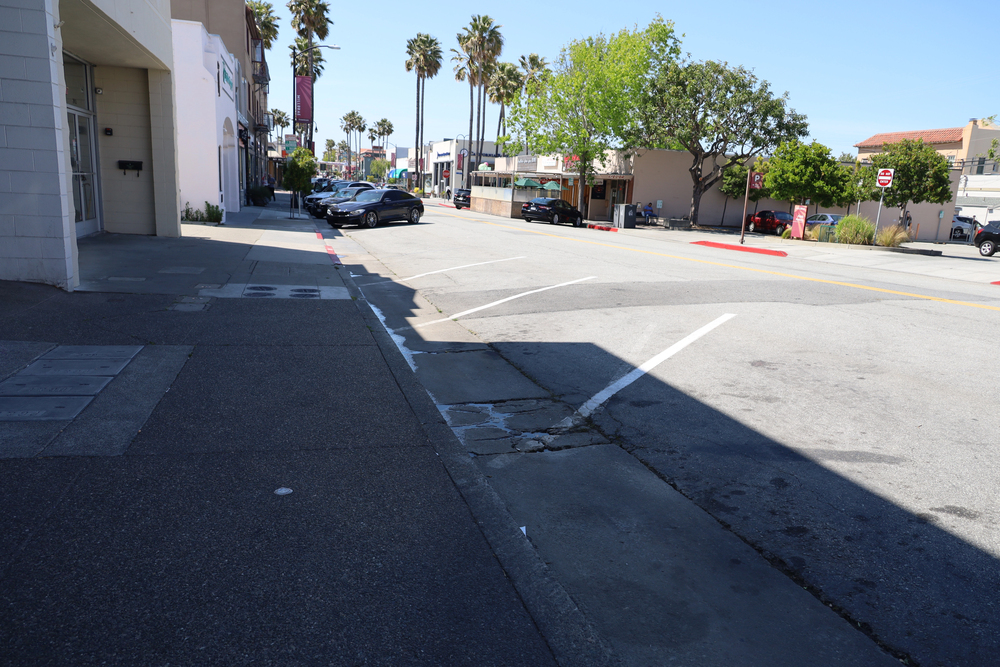
Start with the easement, because it is the mechanism that decides everything else. A public right-of-way is typically an easement the original subdivider dedicated to the City when the tract map recorded. The City holds the right to use and control that strip for public travel and utilities. The underlying fee title often still belongs to the adjacent owner, which is precisely why the maintenance duty can ride with the owner while the surface is treated as public.
In plain terms: the sidewalk can be on your land and still be the public’s to use. That is the source of nearly every argument we referee on a job site.
Five practical steps to determine which category your concrete falls into:
- Pull your parcel on the City of Temecula GIS Map Viewer. You can search by Assessor Parcel Number, address, intersection, or tract map number. Treat it as a starting point, since the City notes the data should not be used for surveying or locating property lines.
- Download the Assessor’s map from the Riverside County Assessor-County Clerk-Recorder. These maps show parcel and lot boundaries, recorded dimensions, street widths, and recorded map information.
- Read your title report and the recorded tract or parcel map. Dedications, easements, and right-of-way grants appear there in language that controls over any online viewer.
- For a commercial center, read the CC&Rs and any reciprocal easement agreement. These frequently assign walkway and drive aisle maintenance among multiple owners or to a center association.
- When the documents are ambiguous, call Temecula Public Works. A five-minute conversation with an engineer beats a five-figure dispute after the pour.
Commercial Properties in Temecula: Why the Answer Is Usually You
For most commercial properties, the right-of-way debate never even starts. The walkways connecting parking stalls to storefronts, the paths crossing a medical campus, the concrete aprons at a loading dock, and the internal drive aisles are private improvements on private land. The owner carries 100 percent of the repair cost, and there is no city cost-share argument available. Our concrete sidewalk installation and replacement work across Temecula is overwhelmingly this category.
Private status does not mean unregulated. Walkways serving a place of public accommodation fall under ADA Title III and California’s Title 24 accessibility requirements regardless of who owns them. That applies to retail centers and restaurants, healthcare facilities, churches and places of worship, and distribution centers alike.
For property managers running multiple Temecula assets, the practical move is to treat walkway condition as a scheduled inspection item rather than a complaint-driven one. We covered how a phased approach works on a real center in our Temecula shopping center project profile, where milling and paving ran same-day per section so the center stayed open throughout.
Who Repairs the Curb, Gutter, and Driveway Approach?
Curb and gutter inside the right-of-way generally follows the same split as the sidewalk beside it. Driveway approaches are the more consistent case: because the approach exists to serve one specific property, cities commonly treat it as the responsibility of the property it serves, even where it sits within the right-of-way. Curb and gutter work also carries a drainage consequence that pure sidewalk repair does not, since a mis-set curb reroutes water into places it was never meant to go.
This matters more than it sounds. Poor drainage is the leading cause of premature failure in Southern California pavement, which we broke down in why Southern California parking lots fail fast. A sidewalk repair that ignores the adjacent concrete parking lot grade tends to fail again within a few seasons.
Any of this work inside the right-of-way requires an encroachment permit, and the City’s paving standards require conformance to the Standard Specifications for Public Works Construction, commonly called the Greenbook, along with City standard notes and the Engineering and Construction Manual.
Sidewalks Inside Temecula HOAs
Temecula has a dense concentration of master-planned communities, and inside them the answer usually lives in the recorded CC&Rs rather than in state law. Where a tract dedicated its streets and sidewalks to the City, the public right-of-way analysis applies. Where the association retained the common area, the association maintains the concrete and funds it through reserves. We work with boards on both patterns through our homeowners association paving services.
Boards run into trouble when reserve studies treat concrete as a single line item alongside asphalt. The two age on completely different curves. Our guide on what HOAs need to know about asphalt paving walks through how to separate them in a reserve plan.
When Does a Temecula Sidewalk Legally Need Repair?
The clearest thresholds come from the U.S. Access Board’s Public Right-of-Way Accessibility Guidelines, issued as a final rule in 2023. Along a pedestrian access route, PROWAG sets these limits on changes in level:
- Up to one quarter inch: permitted to be vertical, no treatment required.
- Between one quarter inch and one half inch: must be beveled at a slope no steeper than 1:2.
- Greater than one half inch up to six inches: must be ramped at a maximum slope of 1:12.
- Greater than six inches: must be treated as a ramp under the guidelines’ ramp provisions.
Use one half inch as your practical trigger. Below it, grinding or a bevel may resolve the condition. Above it, you are typically looking at removal and replacement of the affected panels, because a raised slab that needs a 1:12 transition is no longer a patch job.
PROWAG technically applies to public entities under ADA Title II, so it governs the City’s facilities directly. Private commercial walkways answer to ADA Title III and Title 24 instead. In practice the dimensional thresholds are the standard that plaintiffs’ experts and CASp inspectors reach for either way, which is why we build to them on private work as well. If your project involves transitions, see our ADA ramp requirements in California guide and our concrete ADA ramp and tactile paving resources.
What to Do If the City Contacts You About a Sidewalk
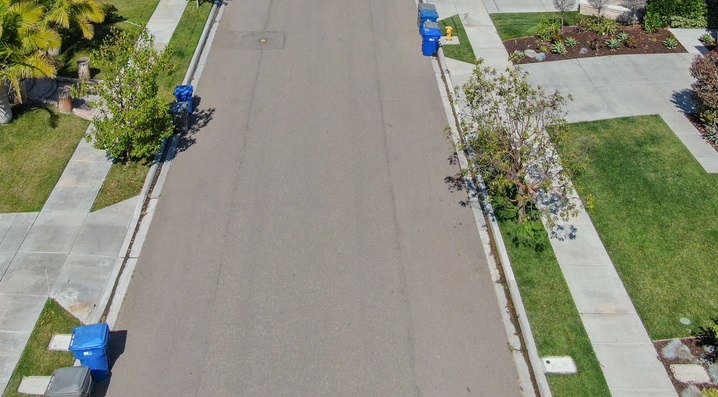
If Temecula sends you a notice or a code enforcement contact about sidewalk condition, work the problem in this order:
- Document the condition before anything changes. Photograph the displacement with a ruler in frame, from multiple angles, and date the images.
- Determine the cause. A City street tree, a utility trench, or grade subsidence points the analysis away from you. Age-related deterioration points toward the Section 5610 default.
- Confirm the location against your parcel map and title documents before you accept responsibility in writing.
- Ask Public Works in writing which authority the notice rests on, and whether the City will perform the work. Use the City contact channels so there is a record.
- If you will perform the repair, pull the encroachment permit first. Work in the right-of-way without one creates a separate enforcement problem on top of the original defect.
- Get a scoped estimate from a licensed contractor. Our concrete flatwork services cover sidewalks, walkways, driveways, and equipment pads, and we handle the permit coordination as part of the job.
One thing to avoid: do not grind or patch a right-of-way sidewalk yourself to make a complaint go away. Temporary patching that does not meet City standards can leave you holding a condition you now demonstrably knew about and controlled.
Frequently Asked Questions
Does the City of Temecula repair sidewalks?
In practice, yes for many conditions. Temecula’s Public Works Department describes maintenance of City sidewalks as part of its mission and asks residents and businesses to report sidewalk problems through the City’s online form or mobile app. State law still places a maintenance duty on abutting owners under Section 5610, and Temecula has not published a sidewalk repair ordinance in Title 12 that would spell out cost recovery. Report the condition and ask the City directly how it will be handled at your address.
Who pays to fix a Temecula sidewalk lifted by a city tree?
Generally the City, though this is one of the most litigated questions in California sidewalk law. Section 5610 excepts conditions created or maintained by parties other than the owner acting under a permit or right granted by the city. California appellate courts have questioned the fairness of imposing repair cost on owners for damage caused by city-planted trees. If a City street tree caused your displacement, document the root intrusion and raise it before agreeing to pay.
Do I need a permit to repair the sidewalk in front of my Temecula business?
Yes, if the sidewalk is in the public right-of-way. Temecula Municipal Code Chapter 18.12 requires an encroachment permit for construction within public rights-of-way, issued by the city engineer subject to conditions necessary for conformance with the code and the Engineering and Construction Manual. Work confined to your private parcel does not need an encroachment permit, though a grading or building permit may still apply.
Is my shopping center walkway part of the public right-of-way?
Usually not. In most Temecula commercial centers the public right-of-way ends at or near the back of curb along the street frontage, and everything inward, including the walkways, drive aisles, and landscape islands, is private property. That means full owner responsibility for repair and full exposure under ADA Title III. Verify against your recorded parcel map rather than assuming.
How much sidewalk displacement counts as a trip hazard?
Use one half inch as the working threshold. Federal PROWAG guidelines permit vertical changes in level up to one quarter inch untreated, require a 1:2 bevel between one quarter and one half inch, and require a 1:12 ramp above one half inch. Anything past one half inch generally warrants panel replacement rather than a patch.
Who maintains sidewalks inside a Temecula HOA community?
It depends on whether the tract dedicated its streets and sidewalks to the City or retained them as association common area. The recorded CC&Rs and the tract map control. Where the association holds the common area, it maintains the concrete and funds it from reserves. We work with Temecula boards on both structures.
Need Sidewalk or Concrete Repair in Temecula?
Victory Paving has been building and repairing pavement across Riverside County for more than 30 years. As a licensed, insured, family-owned Temecula concrete contractor, we handle sidewalks and walkways, curbs and gutters, ADA ramps, ADA parking compliance, and parking lot maintenance for commercial properties, HOAs, and municipalities.
We will walk your property, identify which concrete sits in the right-of-way and which is yours, and scope the repair accordingly. Review our service areas or contact us at (760) 367-8043 for a free, no-obligation estimate.